Sports Equipment Storage in Singapore: A Practical Home Guide
Guide imagery is illustrative.
On this page
- Start with how often each item is used
- Clean and dry everything before storage
- Prepare different types of sports equipment properly
- Use sensible cartons and clear labels
- Protect the equipment without trapping moisture
- Keep an inventory that supports easy returns
- When managed storage makes sense
- A quick sports equipment storage checklist
- Conclusion
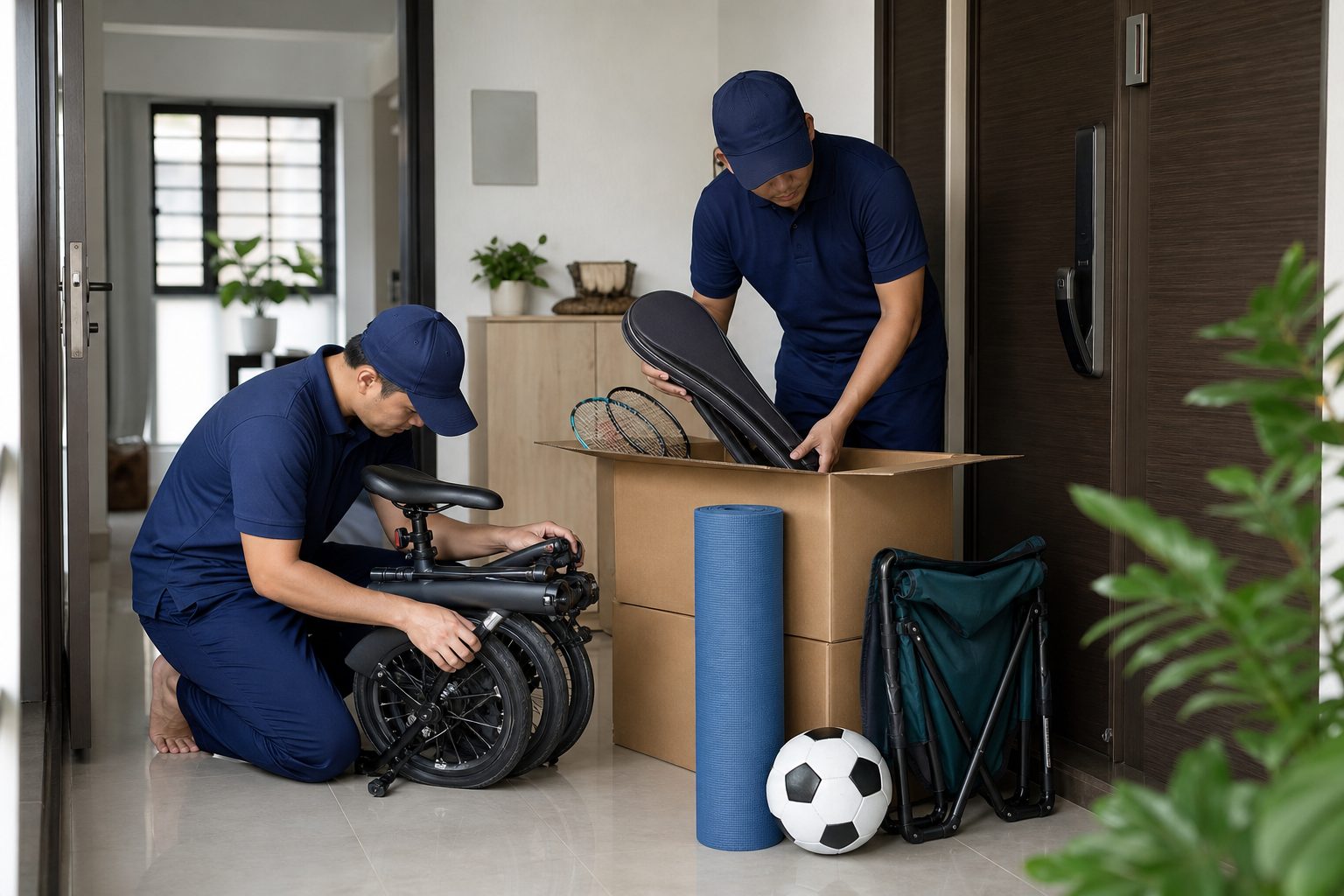
Sports gear is easy to collect and surprisingly hard to store. A bicycle, racquets, yoga mats, footballs and camping chairs can quickly take over an HDB service yard, balcony or spare room. Good sports equipment storage in Singapore starts with deciding what you use often, cleaning each item properly and keeping a simple record of anything stored away.
This guide explains how to organise sports equipment without turning your home into a storeroom. It is written for Singapore households that want a practical system, including families whose activities change with school terms, seasons or work schedules.
Start with how often each item is used
Do not begin by buying more racks or containers. First, place the equipment into three groups:
- Weekly use: items such as running shoes, racquets or a yoga mat that should remain easy to reach.
- Occasional use: camping chairs, travel sports bags or equipment used during holidays and school breaks.
- Long pause: items kept for a future season, a growing child or a planned return to the activity.
This simple division prevents frequently used gear from being buried behind bulky items. It also makes it easier to decide what can leave the flat for managed storage.
Clean and dry everything before storage
Sweat, soil and moisture should not be packed away. Wipe hard surfaces, wash removable fabric parts according to their care instructions and allow every item to dry fully. Empty water bottles and hydration packs. Remove food, used towels and damp clothing from sports bags.
Pay attention to hidden areas such as helmet padding, shoe insoles, bicycle bags and folded camping fabric. A quick check now reduces unpleasant surprises when the equipment is returned.
Prepare different types of sports equipment properly
Bicycles and scooters
Remove loose accessories such as lights, bottles, pumps and phone mounts. Put these small parts in one labelled bag. If the bicycle folds, secure it in the folded position without forcing any mechanism. Protect exposed pedals, levers and other parts that may catch on nearby items. Do not place heavy cartons on a bicycle or scooter.
Racquets, bats and clubs
Use their proper covers where available. Keep racquets flat or upright without bending the frames. Place shuttlecocks, balls, grips and small accessories in a separate carton so they do not disappear into a large sports bag.
Balls and inflatable items
Clean the surface and check the maker’s storage guidance before changing the air pressure. Keep pumps and adaptors together in a marked pouch. Avoid squeezing balls beneath heavier belongings, as this can distort their shape.
Yoga, fitness and camping gear
Clean mats before rolling them loosely with their straps. Make sure resistance bands are dry and free from grit. Fold camping chairs only after the fabric and frame are clean. Small weights should go into sturdy containers that are easy to lift, rather than one overloaded carton.
Use sensible cartons and clear labels
Group items by activity instead of mixing everything together. One carton might contain badminton accessories, while another holds camping equipment. Fill empty spaces with suitable packing material so contents do not shift, but avoid overpacking.
Write a short category and box number on each carton, then keep a matching inventory on your phone or computer. For example, “SPORT 01: badminton racquets, shuttlecocks and grips” is more useful than “miscellaneous”. Our guide to labelling storage boxes for easier returns gives a straightforward system.
Protect the equipment without trapping moisture
Use clean covers to protect awkward items from dust and knocks. Avoid wrapping damp equipment or sealing moisture inside plastic. Keep sharp or protruding parts padded so they cannot damage nearby belongings.
If you are unsure whether a particular item is suitable, check the practical guide to what you can store with valet storage. Batteries, fuels, compressed containers and other restricted materials need special attention and should never be packed casually with household goods.
Keep an inventory that supports easy returns
A useful inventory needs only four details: the item or carton number, a short description, the date stored and who in the household uses it. Add a photo for unusual equipment. This is especially helpful when children’s sizes change or several family members play different sports.
Before storing anything, think about the likely return order. Keep equipment for the next school term separate from gear that may not be needed for a year. Managed valet storage works best when the return plan is clear from the beginning.
When managed storage makes sense
Some equipment belongs at home because it is used every week. Other items occupy valuable space for months between outings. Managed storage can suit that second group because the Pack & Store team arranges collection, stores the items and returns them when requested. It is valet storage, not walk-in self-storage, so it is not designed for frequent customer access.
Before arranging storage, confirm the item sizes, weights, storage duration and applicable collection or return charges. Pack & Store does not promise collection dates until operations has confirmed availability. If the model is unfamiliar, see how Pack & Store’s managed valet storage works.
A quick sports equipment storage checklist
- Keep weekly equipment accessible at home.
- Clean and dry every item completely.
- Remove loose accessories and group small parts.
- Protect frames, handles and protruding components.
- Use sturdy cartons that remain comfortable to lift.
- Label each carton by activity and number.
- Record contents and likely return timing.
- Confirm suitability and charges before collection.
Conclusion
A good system should make it easier to play sport, not harder to find the equipment. Keep frequently used items within reach, prepare occasional gear carefully and record what leaves the flat. With clear labels and a sensible return plan, sports equipment storage in Singapore can free useful space while keeping each item ready for its next season.