Downsizing Storage Singapore: A Practical Home Checklist

Guide imagery is illustrative.
On this page
- Start with the new home’s real dimensions
- Use four clear downsizing categories
- Ask five questions before keeping an item
- Choose the right belongings for downsizing storage Singapore
- Build a downsizing storage Singapore inventory
- Prepare furniture before it leaves
- Plan the first week in the smaller home
- Review your downsizing storage Singapore plan
- Common downsizing mistakes to avoid
- A final downsizing storage Singapore checklist
- Make a smaller home work for your life now
Downsizing a home can be a positive change, but deciding what should move with you is often harder than packing. A smaller flat may suit your current lifestyle, yet furniture, documents and family belongings can quickly overwhelm the new space. A clear downsizing storage Singapore plan helps you make decisions before moving day instead of shifting clutter from one home to another.
This practical checklist is designed for Singapore households moving to a smaller HDB flat, condo or temporary home. It helps you measure the new space, sort belongings, prepare stored items and plan what you may need returned later.
Start with the new home’s real dimensions
Begin with the floor plan, but do not rely on it alone. Measure the rooms, doorways, corridors and built-in features. Note where doors swing, where power points sit and how much wall space remains after wardrobes or kitchen cabinets are included.
Measure large furniture as well. A sofa may fit the living-room floor area but block the balcony door. A dining table may fit when empty but leave too little room once chairs are pulled out. Record the height, width and depth of each large piece, then mark it on the new floor plan.
If you are moving into an HDB flat, also check lift access, corridor turns and any building-management requirements that affect moving day. These practical limits can decide whether a bulky item should move, be passed on or be stored.
Use four clear downsizing categories
Create four zones before packing. Label them move, store, pass on and dispose responsibly. Every item should enter one zone. A separate “decide later” pile usually becomes a second form of clutter, so keep it small and give it a deadline.
- Move: items that fit the new home and support daily life.
- Store: useful or meaningful belongings that you do not need regular access to.
- Pass on: usable items that relatives, friends or community organisations can use.
- Dispose responsibly: damaged, unsafe or unusable items that should not travel with you.
Work through one room or category at a time. For example, finish all kitchen equipment before starting on books. This makes progress easier to see and prevents similar items from being judged by different standards.
Ask five questions before keeping an item
When a decision feels difficult, ask the same five questions each time:
- Will it fit comfortably in the new home?
- Have we used it during the past year?
- Does another item serve the same purpose?
- Would replacing it later cost more than keeping or storing it?
- Does it carry genuine personal value, or are we keeping it from habit?
The answers do not need to be purely practical. A family keepsake may deserve space even if it has no daily use. However, naming the reason helps you distinguish meaningful belongings from items that remain only because nobody has made a decision.
Choose the right belongings for downsizing storage Singapore
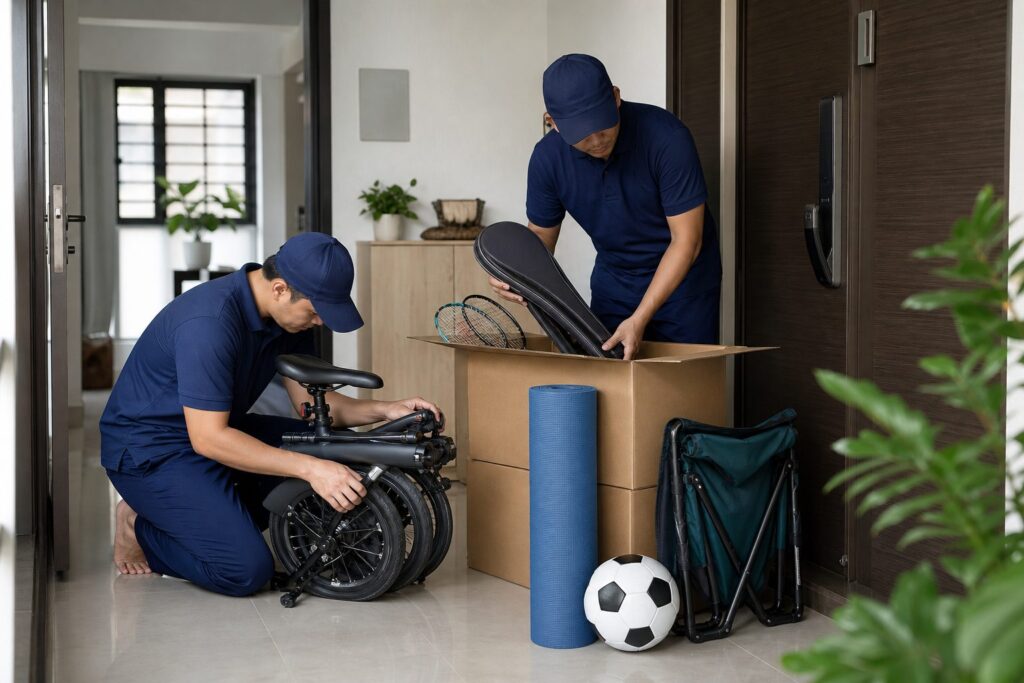
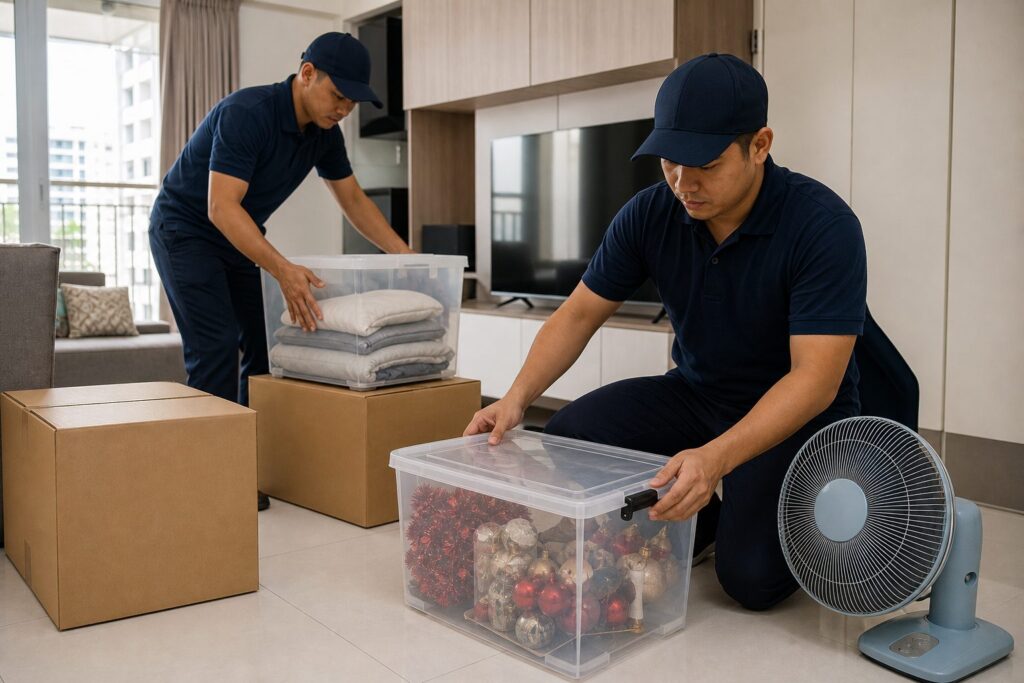
Storage is useful when it supports a clear plan. It should not become an automatic destination for everything that does not fit. Good candidates include seasonal decorations, archived family records, spare furniture for a future home, hobby equipment and keepsakes that you expect to revisit.
Avoid storing passports, medication, current legal papers or anything needed at short notice. Keep these essentials with you. Also check the storage provider’s written restrictions before packing unusual, fragile or high-value items.
For more ideas on choosing suitable belongings, read our guide to what you can store with valet storage. If you are unsure how much room your belongings may require, the room-by-room storage space guide provides a useful planning framework.
Build a downsizing storage Singapore inventory
A clear downsizing storage Singapore inventory prevents stored belongings from disappearing from memory. Give every box and bulky item a unique number. Record a short description, its original room, who owns it and when it may be needed again.
Use descriptions that will still make sense months later. “Kitchen 4 — baking tins and serving dishes” is more useful than “miscellaneous.” Photograph bulky items and the outside of each sealed box. Keep the inventory in one shared file rather than several competing lists.
Add a return priority such as “soon”, “seasonal” or “long-term”. This is especially helpful with managed storage because you can identify what should come back first. Our storage-box labelling guide explains a simple numbering system in more detail.
Prepare furniture before it leaves
Clean and dry furniture before packing. Empty drawers and cabinets, secure doors and remove loose shelves where practical. Put screws, fittings and small parts in a labelled bag linked to the main item. Do not tape loose hardware directly to a finished surface.
Take photographs before wrapping or dismantling furniture. They provide a useful reference when the item is returned and assembled. Protect corners and delicate surfaces with suitable packing materials, while keeping walkways clear for safe handling.
Plan the first week in the smaller home
Pack a separate first-week group that will not enter storage. Include bedding, basic cookware, work equipment, chargers, cleaning supplies, daily clothing and important documents. If children or older family members are moving with you, add the items that keep their routines comfortable.
Do not fill every cabinet immediately. Live in the new home for a short period before requesting stored items back. You may discover that a piece of furniture is unnecessary or that a different storage arrangement works better than expected.
Review your downsizing storage Singapore plan
Choose a review date when you create the inventory. Six or twelve months may suit long-term household items, while seasonal belongings can be reviewed after their next use. At each review, ask whether the item still supports your plans.
If something has remained stored through several reviews and no longer has a clear purpose, consider passing it on. Regular reviews keep your storage plan intentional and stop it from becoming permanent indecision.
Common downsizing mistakes to avoid
- Buying organisers before measuring the new rooms and cabinets.
- Keeping several versions of the same appliance or household tool.
- Packing essential documents or medication into storage.
- Using vague box labels that make later returns difficult.
- Assuming all existing furniture will suit a smaller floor plan.
- Storing items without a review date or clear reason.
- Forgetting to check access rules, lift bookings and corridor dimensions.
A final downsizing storage Singapore checklist
- Measure the new rooms, doors, corridors and large furniture.
- Sort every item into move, store, pass on or dispose responsibly.
- Keep daily essentials and important documents with you.
- Number stored boxes and record their contents.
- Photograph furniture and link loose parts to the correct item.
- Mark return priorities in your inventory.
- Confirm moving access and collection arrangements.
- Set a date to review stored belongings.
Make a smaller home work for your life now
Downsizing works best when every belonging has a reason and a destination. Measure first, make decisions in consistent categories and protect the items you choose to keep. A simple inventory also makes future returns easier to manage.
For households that want to avoid moving belongings to and from a warehouse, managed valet storage can support the transition. Pack & Store collects, stores and returns items by arrangement. It is not walk-in self-storage, so a clear inventory and return plan are important from the start.